Description
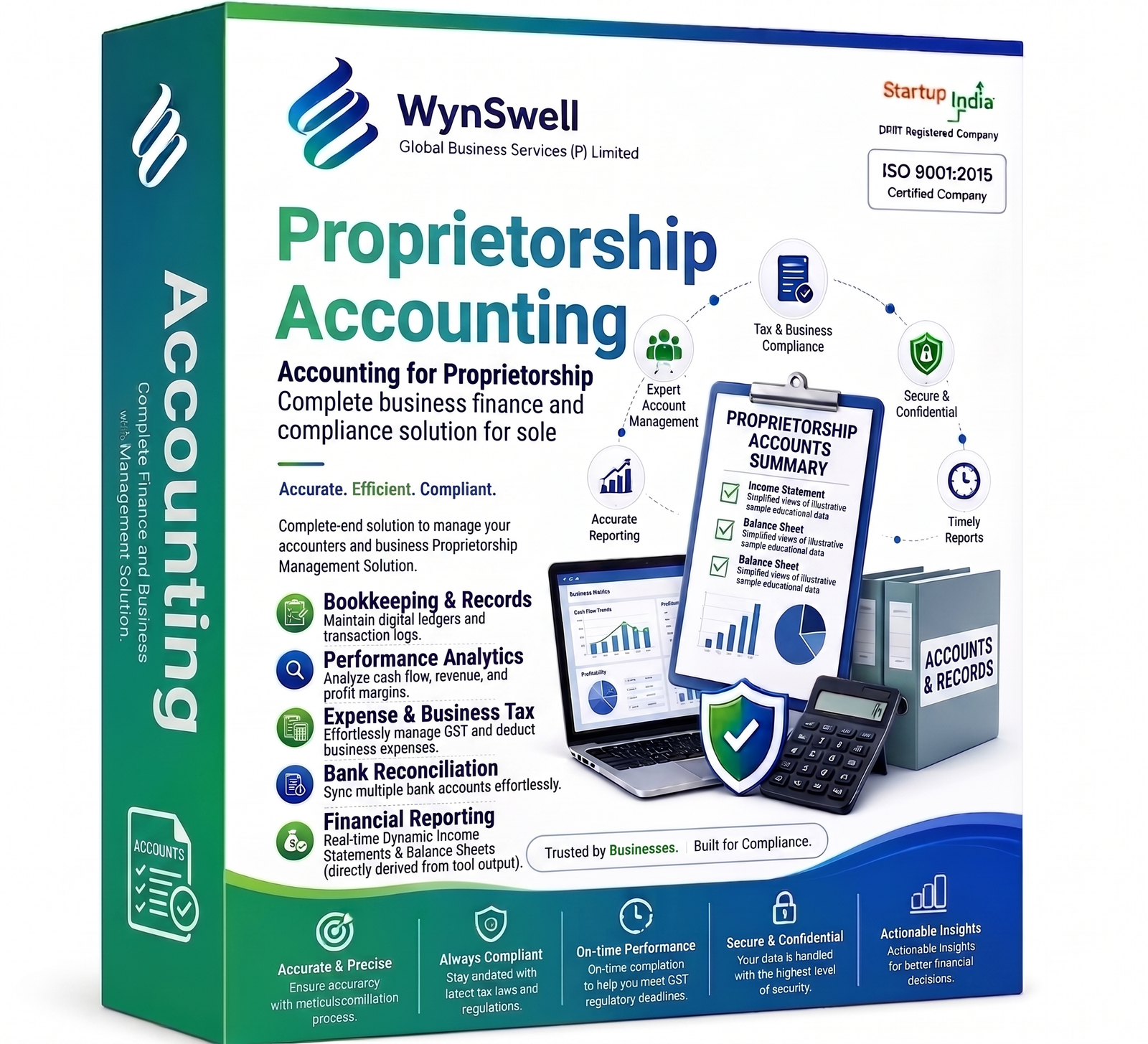
Accounting for a sole proprietorship is the process of recording, summarizing, and analyzing the financial transactions of a business owned and operated by a single individual. While the owner and the business are considered the same legal entity, maintaining strict financial separation is the golden rule of proprietorship accounting.
Here is a breakdown of the core principles, key components, and compliance factors involved in managing a proprietorship’s books.
1. The Core Principles
-
The Business Entity Concept: Even though there is no legal distinction between the owner and the business, accounting rules require you to treat them as entirely separate. Personal expenses must never be mixed with business expenses.
-
The Accounting Equation: The entire system balances on one fundamental formula:
$\text{Assets} = \text{Liabilities} + \text{Owner’s Equity}$
-
Cash vs. Accrual Basis: Proprietorships can choose to record transactions when cash actually changes hands (Cash Basis) or when the revenue is earned/expense is incurred regardless of cash flow (Accrual Basis). Accrual is generally required for businesses carrying inventory.
2. Key Accounting Elements Unique to Proprietorships
Unlike corporate accounting which deals with shares and dividends, a proprietorship relies on a few specific accounts to track the owner’s financial stake:
-
Capital Account: This records the initial and any subsequent funds or assets the owner invests into the business.
-
Drawings Account: When the owner takes cash or inventory out of the business for personal use, it is recorded here. Drawings are not considered a business expense; rather, they directly reduce the Owner’s Equity.
-
Net Income/Loss: At the end of the financial year, the profit or loss generated by the business is transferred directly to the owner’s Capital Account.
3. Financial Statements
To assess the health of the business, three main statements are regularly generated:
-
Income Statement (Profit & Loss): Details revenues minus expenses to show the net profit over a specific period.
-
Balance Sheet: A snapshot of the business’s financial position at a given moment, detailing Assets, Liabilities, and Owner’s Equity.
-
Statement of Cash Flows: Tracks the actual cash entering and leaving the business, which is crucial for managing day-to-day operational liquidity.
4. Compliance and Tax Integration
Proper accounting is directly tied to regulatory and tax compliance. For businesses operating under GST regulations, meticulous bookkeeping is non-negotiable.
-
Invoicing and GST: If the proprietorship is registered for GST, every sales invoice must accurately reflect the applicable tax brackets (such as the standard 18%).
-
Input Tax Credit (ITC): Accurate tracking of all business purchases is required to claim ITC and offset tax liabilities.
-
Income Tax Returns (ITR): Because the business is not a separate legal entity, the business’s profits are filed as part of the owner’s personal income tax return, typically using forms specifically designated for business and professional income.
Maintaining these distinct financial boundaries ensures that operational workflows—whether managing agricultural supply projects, retail storefronts, or service contracts—remain transparent, profitable, and compliant.
Are you looking to set up a chart of accounts for a new proprietorship, or are you looking for ways to streamline your current bookkeeping process?